Description
What to expect:
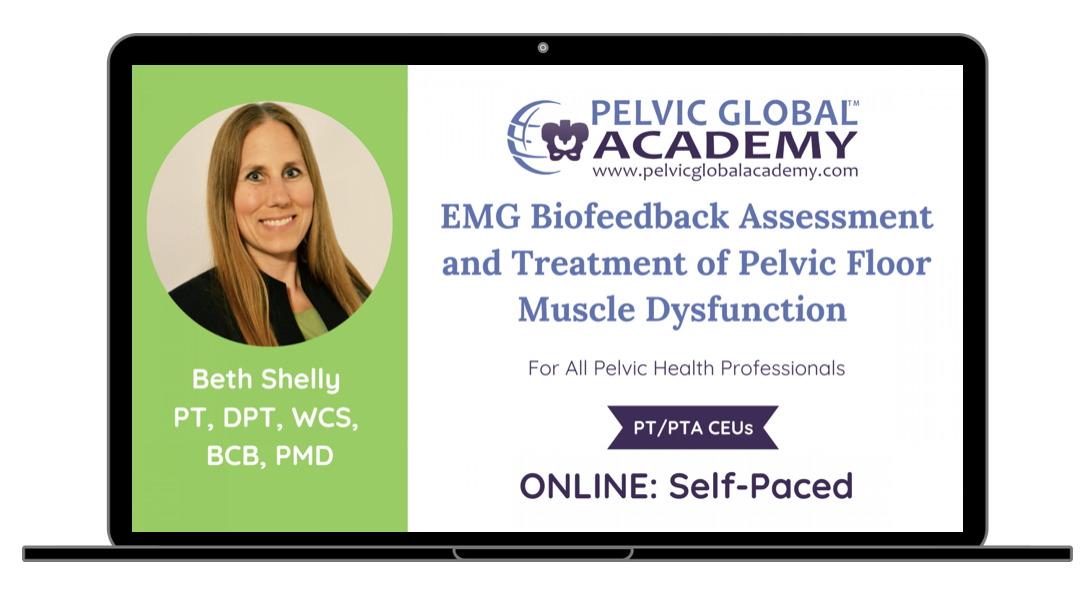
Did you ever feel confused by the EMG tracing or wonder why the EMG training does not match your manual assessment? The most common reason for both is lack of therapist training. You are not alone, many pelvic therapists do not have the education, skill and knowledge to get the most out of EMG assessment and treatment. However, EMG is the only assessment that can document overactive PFM and can be instrumental in patient learning.
This course will provide pelvic therapists with comprehensive knowledge on EMG biofeedback assessment and treatment for a variety of pelvic floor muscle conditions. Course content includes the most recent research and integrates the new International Continence Society (ICS) pelvic floor muscle (PFM) assessment terminology.
Participants are expected to have a basic understanding of PFM anatomy, physiology, and pathology. Join us, learn more and get the most out of your EMG assessment and treatment.
What will you learn?
OBJECTIVES:
At the completion of this course, participants will be able to:
At the completion of this course, participants will be able to:
- List conditions which could influence EMG signal amplitude and their clinical implications
- Properly place external and internal EMG electrodes
- Evaluate and interpret an EMG tracing and accurately label the findings using the ICS PFM assessment terminology
- Explain the EMG tracing to a patient for maximum motor learning
- Develop an EMG treatment plan for up training, down training and coordination training of the PFM